Heavy Pepper Periodic #2
Welcome to the second issue of Heavy Pepper Periodic! Here's what we've got for you this time:
Nielsenauts out now!
Available in print at Space Penguin Ink, and coming soon to DTRPG.
Nielsenauts was a pet project I was writing on the side while finishing up the Pathika manuscript, originally written two years ago (but substantially developed since then). The idea behind this game was to explore two main themes: 1) the ridiculous situations TV writers are put in to create content for megacorps, and 2) the false promise of AI scab labor as a replacement for human creativity. I think I probably hit #1 a bit harder than #2 in the final product, but I did want to prioritize putting out a fun game moreso than a serious commentary on the labor market. Despite appearances, this is not a lyric game but a thing for you to actually be able to spontaneously pull out and get running at a dinner party or casual hangout.
The result is a light, short improv game that is nonetheless pretty challenging. You play as AI virtual consciousnesses called nielsenauts who are brought into existence 15 minutes at a time to create television in a live feed. As AI people in a virtual world, you can create whatever sets, extras, visual effects, etc that you need simply by saying it's there, so the sky's the limit for what can be in your show. However, you must abide by two sets of limitations: five fickle and uninformed demands of your CEO (inspired by Jeff Bezos's infamous list of things to include in TV shows) and five buzzwords determined to currently be trending by your marketing department.
One of the key features and thematic statements of the game comes with scoring. Scoring is deliberately unfair: before you score, four of the ten metrics you had to meet will change, but you must still account for the new metrics in your scoring. Scoring is self-performed, which I was initially unsure of before testing the game. I was surprised to find that my play groups all tended toward being critical of their own work, which led to a lot of cancelled shows. Of the three components to scoring (self-grading, executive orders, market buzz words), my play groups consistently found that caring too much about the orders they were given resulted in a low opinion of their own shows, which meant the self-grading portion tended to be the lowest part of their score. I think this is a good thing, and my guess is that playing this game multiple times will get the players more comfortable with improv and feeling better about the episodes they feel they really nailed.
If this sounds good to you, please consider buying a copy from Space Penguin Ink! Sales of this, alongside those of the Pathika preview doc, will help the publisher see a high production release of Pathika as a sure bet.
(Disclaimer: While this game uses a futuristic version of AI as its subject matter, it is not made using any AI tools, nor do I have any intention of using AI for Pathika or any of my other projects. The discussion of AI in this game is primarily as a sci fi proxy for the issues TV writers currently encounter in writing for corporations, but also an argument that a hypothetical future AI that can approximate human creativity will be its own form of labor that is likely to be exploited the way humans are now.)
New Blog Post
Just one blog post this time: a preview of the unique mechanics in Pathika. The post goes through the unstable market, the crises that periodically hit the city, and the fame mechanics. If you've been following Pathika closely you've probably seen some of this stuff already, but it's covered in more depth in the post.
Production Updates
A big update this time: production on a preview version of Pathika is officially underway! This 40-50 page book will contain just enough of a taste of the setting to get a Pathikan campaign going, including a cultural and conceptual overview, district and building generators, a loot table, encounters and a bunch of sample "library" content like NPCs, guilds, etc. By page count, it represents roughly 20% of the content in the book, but in all honesty it should rival some existing published city books in the breadth of content provided.
I'm excited to announce that we've officially gotten Dai Shugars and Yomiya on board for layout and art, respectively. I'm geeking out a bit to have Dai working on this, as Magical Industrial Revolution and Kidnap the Archpriest have been big influences on my RPG content production sensibilities and very useful books at my table. Similarly, Yomiya's work on Old School Stylish and Nielsenauts has been phenomenal. Putting these two amazing artists together on the same project is definitely a dream come true for me.
Sales of this preview will be critical to estimating the budget Pathika can work with for art and physical book design when it goes to crowdfunding. I'm not sure what price it will be set at just yet, but I can say that if it does cost anything, it will be cheaper than a book of this page count and art budget would normally be. This is primarily a marketing investment and an interest check, and we're under no illusions that its sales will cover the art and layout costs (plus a lot of this work will help with making the final book, anyway).
I know it sounds weird that I need to do an interest check before moving to crowdfunding, which is in itself a kind of interest check. But the reality is that getting a successful crowdfunding campaign going is expensive. When you look at some of the more successful recent TTRPG Kickstarters, you can see that a lot of layout and art production goes into just convincing people to click pledge, before a single dollar is collected. And if doing so results in a failed Kickstarter, that's a major setback for the publisher, who has limited time slots for crowdfunding. To spend a valuable slot on me and have it backfire would be catastrophic for even a big company, so a lot rides on correctly estimating our audience.
Adding to that, I have no desire to lowball the campaign goal for this book. I want to do it right and I want to be honest about what it's going to cost. Most importantly, I want to make sure every member of the production staff gets paid fairly. That means 20 cents a word for every guest writer (all of whom have already been paid) and what's looking to be probably around $10,000 in art and layout costs, at minimum. And that's before we even get to printing costs! So with all that in mind, we need to make sure we set a realistic funding goal that can be met by a realistic number of backers. This is why the numbers for Nielsenauts and this upcoming Pathika "demo" are going to be vital. I promise you I will work very hard to make it worth it!
P.S. I should note that anyone currently looking at this newsletter has already done a lot to support this project, and I really, really appreciate it.
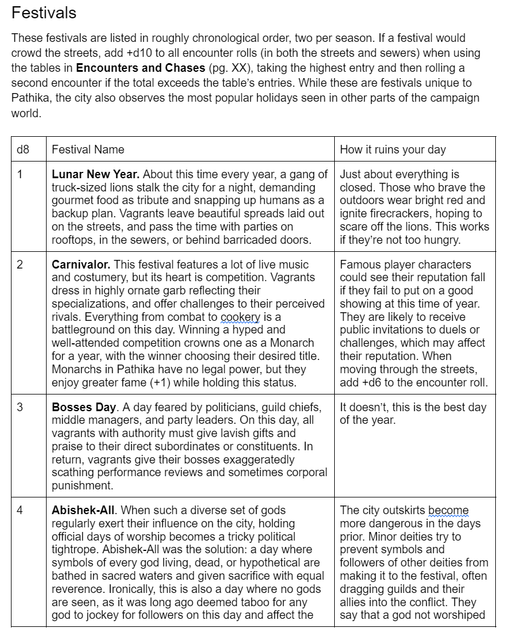
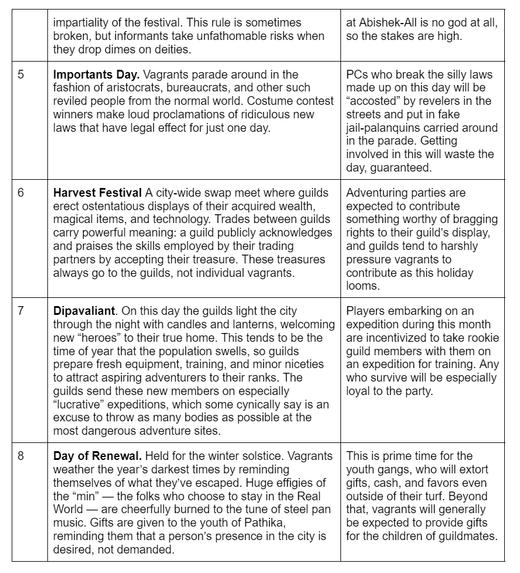
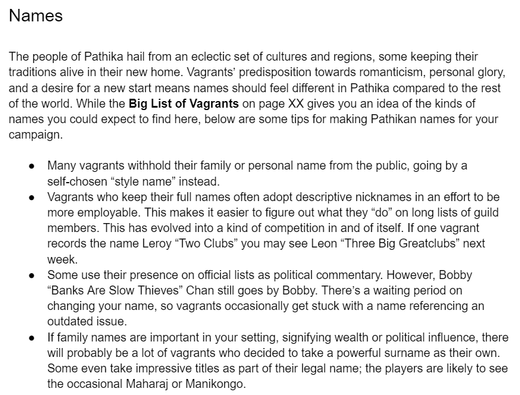
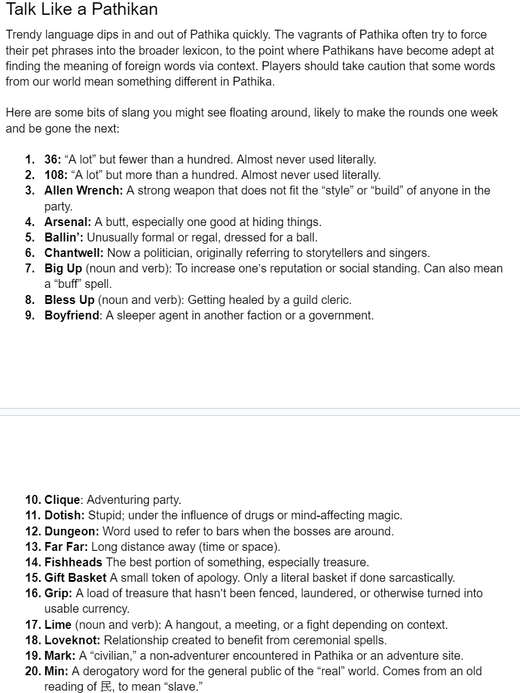
Pathika Preview: Cultural Potpourri
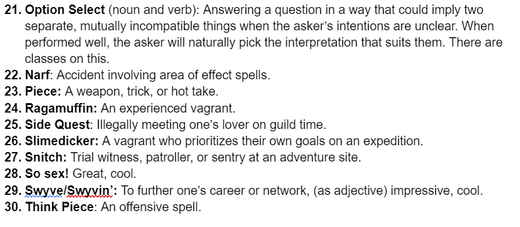
I tried to make Pathika a concept that could be easily tailored to your own campaign map and tone, but a decent amount of what my own version of Pathika has made it into the final manuscript. As you might expect, it's a lot of Trini stuff with a dash of Hip Hop. On top of that, however, I tried to integrate bits of Chinese culture as well. As Pathika is strongly inspired by the Water Margin, it seemed like it made sense to also pay tribute to the cultural context of that work. As a result, the prewritten parts of Pathika have a lot of influence from Caribbean, East Asian and East African culture. It's a melting pot city, but one that leans a bit more in the direction of cultures you don't see represented quite so much in typical D&D-adjacent works. Below are a couple examples of where the book examines a hypothetical culture that might pop up if Pathika survives more than a single generation:
Media Recommendation: Musui's Story
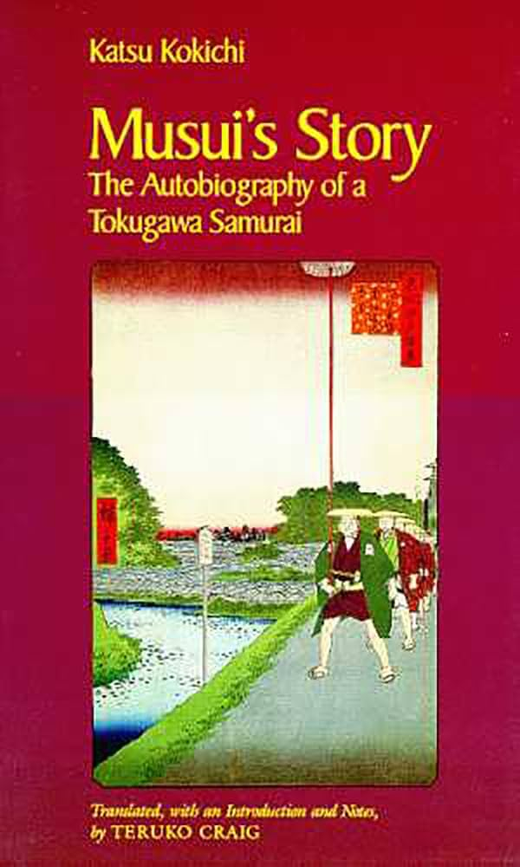
I've seen a lot of people asking about good sources for running Japanese TTRPG campaigns. My first recommendation is always going to be some kind of social history, as these tend to focus more on on-the-ground information about what it was actually like to live in these places in these times. If you're running a game in, say, the Sengoku era, there's only so much gameable content you can pull from the military decisions of Oda Nobunaga or what the emperor is currently doing. Instead you want to b e looking at how people procure food, fix their shoes, get married and make love. The social history book linked above is one good look at this, but its weakness for TTRPG materials is that it focuses on normal people. And, well, TTRPGs are rarely about well-to-do, polite society, right? You want to know about the drifters, the philanderers, the absolute goblin men. My main recommendation this month is the (possibly) true story of one such goblin man.
Musui's Story is the autobiography a nearly disgraced Edo period samurai named Katsu Kokichi, who spent a lot of his youth running away from home, living as a drifter between Tokyo and Nara, frequenting the whorehouses, getting into street fights, and generally doing everything a samurai's not supposed to do. As it's originally written for an audience that would live in the Edo period, a lot of the historical details you might hope for are sketched vaguely, but you'll still get a lot of good usable details about what it's like to travel in that time period, what interactions with strangers on the road look like, etc. As far as firsthand accounts (and, frankly, admissions) of this kind go, this book's content is pretty rare. Check it out if you're interested in running something at around the technology level of 1800s Japan.
Back Issues
Missed the previous issue? It's available here! Until Mailbob gets their back issue feature back up, I will continue linking to all back issues in each issue of the newsletter.
Until Next Time
Questions? Comments? Things you want to see covered in the mailing list? Send them to me at [email protected], on Discord @nickoten or on Twitter @nickoten. Your feedback will help me tailor the content of future newsletters, and is highly appreciated! See you next time.
|